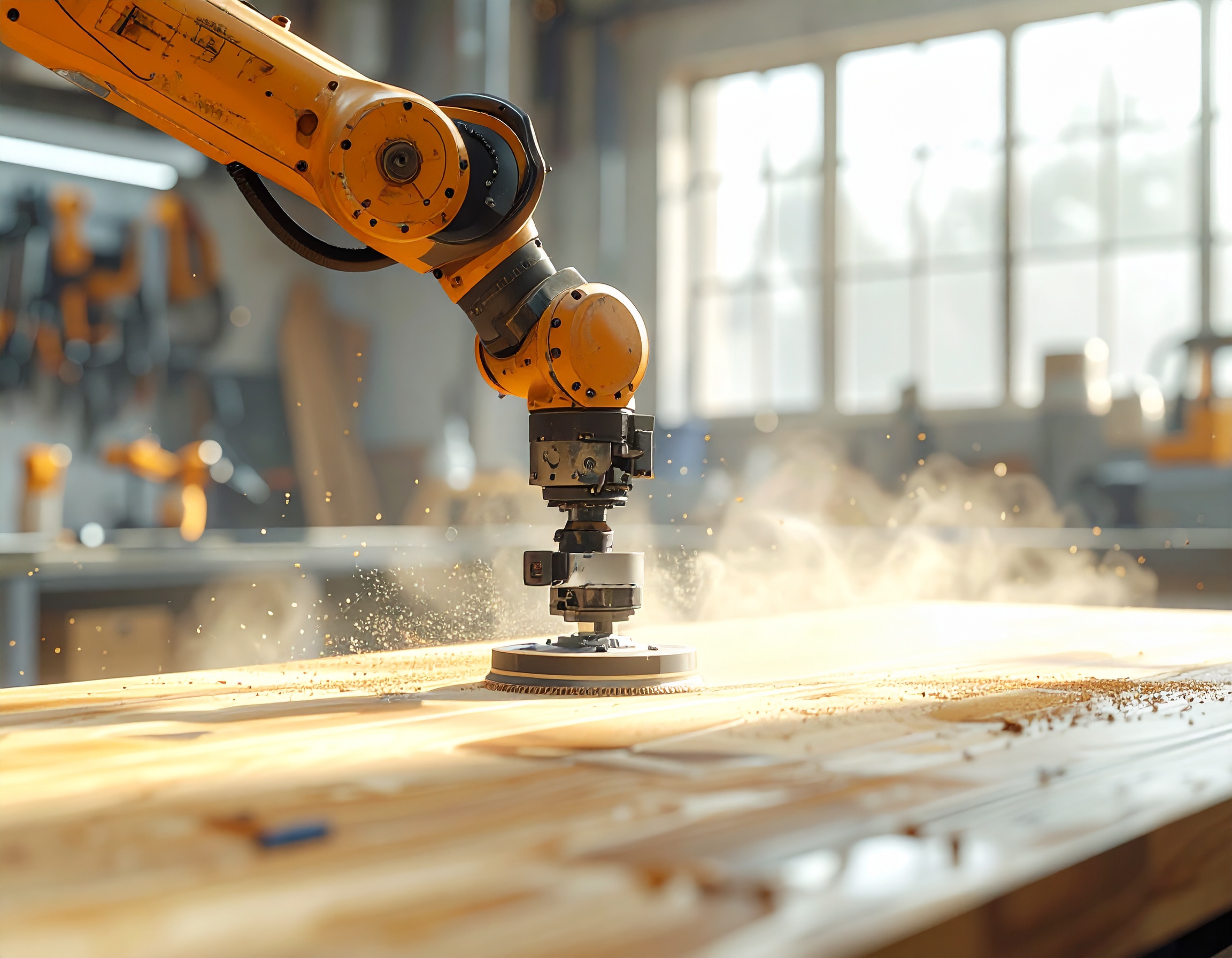
Large-Part Processing, Flawless Surface Quality, and Flexible Production
The furniture industry is a manufacturing field that requires high processing precision, aesthetic surface quality, and flexible production capability for panel-based, solid wood, and upholstered products. Robotic automation systems provide the most effective solution to meet these demanding requirements.
Robots eliminate human error in challenging and dusty processes such as sanding, painting, and adhesive application, ensuring perfect and repeatable surface quality. The advanced robotic solutions we deliver elevate production speed, material efficiency, and workplace safety to the highest level across board and panel handling, cutting, painting, and assembly processes.
By utilizing robots, the need for manual handling of heavy and large components under ergonomically unfavorable conditions is eliminated. In addition, the automation of chemical processes such as varnishing, painting, and adhesive dispensing significantly improves both product quality and occupational safety.
Robotic Automation Solutions for the Furniture Industry
1. Painting and Varnishing Applications
Uniform, flawless, and repeatable paint/varnish application is achieved with precise spray control on surfaces such as cabinet doors, table legs, and chair frames. This optimizes both visual quality and chemical material consumption.
2. Sanding and Surface Preparation
Wood, MDF, or metal surfaces are prepared with high precision, homogeneity, and scratch-free quality using robotic sanding systems capable of adapting to complex geometries. The elimination of manual errors ensures excellent repeatability in serial production.
3. Adhesive and Bonding Applications
In edge banding, upholstery, and part-joining operations, robots apply adhesives with precise dosing and automated path control, reducing waste and standardizing bonding quality.
4. CNC Machine Tending
Automatic loading and unloading of heavy MDF, particle board, or solid wood panels into CNC machines is performed by fully synchronized robots—improving both operator safety and production throughput.
5. Assembly and Packaging
Robotic arms assemble drawers, doors, and structural frames with high accuracy and speed. At the end of the process, automated stations prepare products in ready-to-ship packaging formats.
6. Vision-Based Quality Inspection
Integrated camera and AI-powered systems instantly detect scratches, stains, or assembly defects on painted surfaces, ensuring consistent product quality across the production line.
Contributions of Robotic Automation to the Furniture Industry
Up to 40% increase in production speed
90% reduction in labor-related error rates
Up to 25% savings in chemical material consumption
Maximum improvement in workplace safety and ergonomics
Increased product quality consistency and brand reliability